Streaming YouTube live chat through Kinesis and Flink
A real-time pipeline on AWS that captures live-stream comments, lands them in an S3 data lake and aggregates them with Flink SQL as they arrive.
Live chat on a popular YouTube stream is a small firehose: bursty, unbounded, and gone if you don’t catch it. I built this with two classmates for a big-data course at EAFIT to answer a simple question end to end: how do you capture an unbounded stream once and use it twice, cheaply stored and queryable in real time?
Architecture
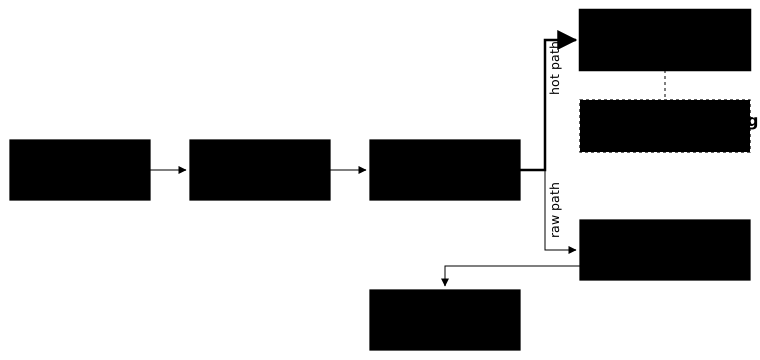
- Collector (EC2, Python/Flask). A small HTTP service takes a live-stream ID and starts pulling its chat with
pytchat, pushing every message to Kinesis withboto3. - Kinesis Data Streams is the single ingestion point. Everything downstream reads from it, so adding a consumer never touches the collector.
- Raw path: Kinesis Firehose → S3. Firehose batches records into the data lake untouched, so any later analysis can replay the raw history.
- Hot path: Apache Flink. Flink SQL (in a Kinesis Data Analytics Studio notebook) reads the same stream, with the schema registered in the Glue Data Catalog, and keeps running aggregates.
Querying the stream
The simplest useful query counts comments per stream, updating continuously as messages arrive:
SELECT videoId, COUNT(*) AS comment_count
FROM yt_live_comments
GROUP BY videoId;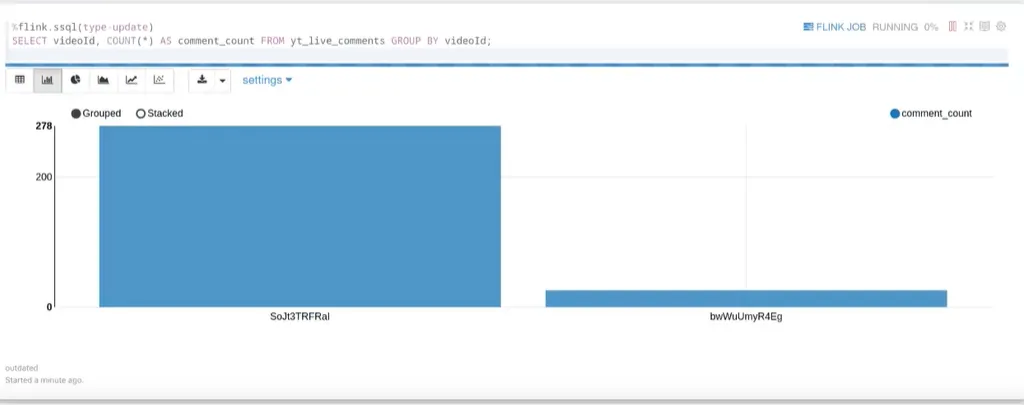
What I’d do differently
The hot path never persisted its results: Flink’s aggregates lived only in the notebook. Today I’d write them to a sink table (or back to S3 as Parquet) and treat the notebook as a viewer, not the system of record. I’d also put the collector behind a queue of stream IDs instead of a single HTTP call, so it could follow several streams and survive restarts.